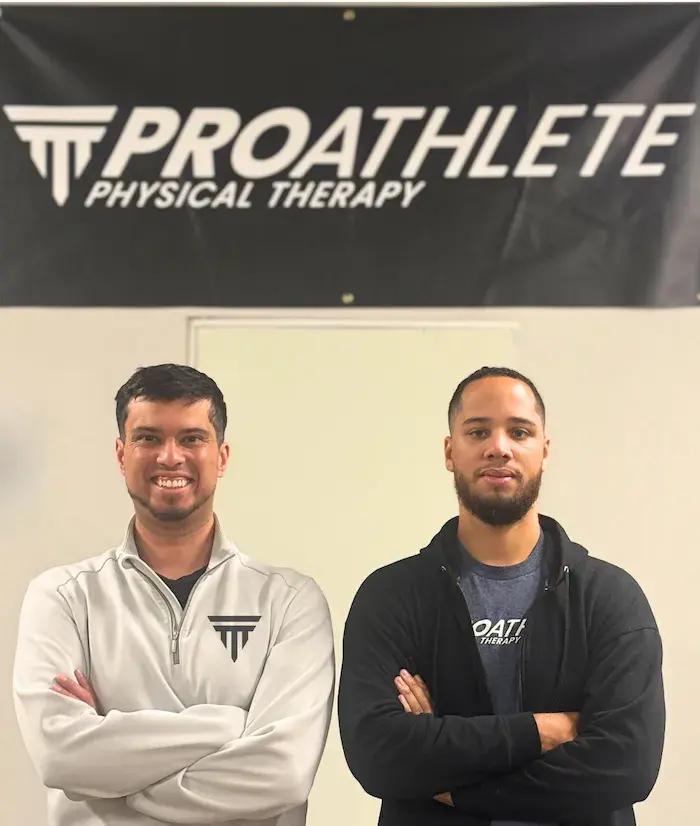
Written by Dr. Edwin Porras, DPT, OCS and Thaddeus Hayes, MAT, LAT, ATC, | Former Minnesota Twins Medical Staffers
Baseball arm injuries in Denver athletes are most often caused by "overuse" from year-round pitching, not just one bad throw. You or your son will keep throwing through elbow soreness because the radar gun still reads 85 mph. By the time the pain is bad enough to mention, the arm has already been taking damage for weeks or months.
The three biggest reasons for arm injuries are too much throwing without rest, bad sleep and diet habits and simply not being strong enough to handle the stress of throwing a baseball. Denver baseball families can prevent most of these injuries with an athlete's diet, workload tracking, proper sleep, and a structured arm care program.
If your son plays baseball in Denver, you already know the grind. Travel ball, fall leagues, showcases, indoor lessons through a long Colorado winter. Athletes never get a real offseason. We built this baseball arm injury guide for Denver families because the same preventable patterns keep landing athletes in our clinic.
This guide is for Denver-area parents and baseball players who want straight answers about arm health. It was built by Dr. Edwin Porras, DPT, a Board Certified Orthopedic Specialist who spent 2 years on the medical staff of the Minnesota Twins and is a published author on baseball interval throwing programs", and Thaddeus Hayes, MAT, LAT, ATC, who spent more than 5 years with the Twins organization and now leads our Armcare and Performance program.
Together we run a Denver baseball physical therapy practice with locations in Lakewood and Centennial serving players across the Front Range, from Highlands Ranch to Fort Collins, and we see the same preventable injuries over and over. Below you will find our best material on three questions every baseball family in Colorado eventually asks: how do we prevent arm injuries, how much baseball is too much, and how to actually recover.
Want more personalized advice? We'll look at your son’s current throwing schedule and tell you immediately if he’s in the 'red zone' for an overuse injury.
Book a call with us.
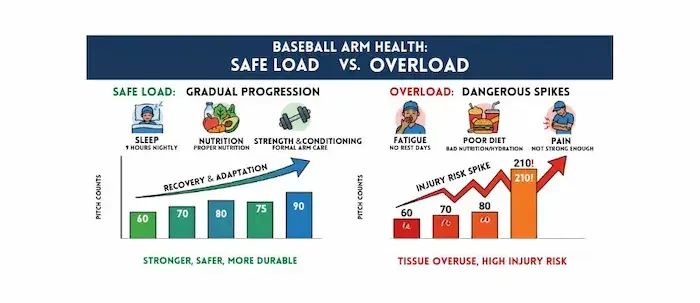
Most baseball arm injuries in Denver youth players are not freak accidents. They are predictable results of workload, physical weakness, and bad recovery routines that build up over time. The hardest part for Colorado families is that the sport hides the warning signs. Your son will keep throwing through elbow soreness because the radar gun still reads 85 mph. By the time the pain is bad enough to mention, the arm has already been taking damage for weeks or months.
Pitcher injury prevention in Colorado comes down to five pillars: sleep, nutrition, strength training, mechanics, and recovery. Miss any one of them and risk sky rockets. Hit all five and the odds of a serious arm injury drop to almost nothing. Our guide walks through each pillar with the exact numbers we use with our own athletes, including the sleep hours, protein targets, and in-season lifting splits we recommend baseball athletes. Start here if you want the full framework in one place:
Colorado players often pitch year-round between travel teams, school ball, and indoor facilities. Pitch counts and load management are the two numbers every Denver baseball parent should track on a whiteboard at home. A high schooler who throws a 90 pitch outing on Saturday, then another 40 pitch bullpen Tuesday, then a 70 pitch start Friday has a problem, even if no single outing crossed a pitch count limit.
The research on UCL injuries is consistent: total pitches per week, per month, and per year matter more than any single game. Rest days between throwing sessions matter more than velocity. And showcases in the fall, after a full summer of travel ball, are the single highest risk window of the year for Denver families. The two guides below give you the exact weekly and yearly numbers to track, plus how to think about load management across the long Colorado baseball calendar.
Recovery is where Denver baseball families lose the most ground. Sleep, nutrition, and daily habits matter more than any ice bag, compression sleeve, or cupping session. A 16 year old pitcher running on 6 hours of sleep and a protein bar for breakfast cannot recover from a weekend tournament, no matter what supplements he takes or how much he ices.
Our Denver baseball physical therapy practice treats recovery as the foundation of everything else. Before we talk about arm care exercises or mechanical tweaks, we want to see a player sleeping 9 hours a night, eating real food at every meal, and following a repeatable daily routine. The two guides below are the exact recovery playbook we hand to every new patient in our Denver arm care program.
PRO Athlete Physical Therapy is Denver-based and founded by Dr. Edwin Porras, DPT, a Board Certified Orthopedic Specialist who spent 2 years on the medical staff of the Minnesota Twins before opening PRO in 2024. Our Armcare and Performance program is led by Thaddeus Hayes, MAT, LAT, ATC, who spent more than 5 years with the Twins organization working with minor and major league players.
We work with baseball players ages 13 and older in Denver, Aurora, Centennial, Lakewood, Boulder, Highlands Ranch, and the surrounding Front Range. Our patients include travel ball pitchers, high school starters, college commits, and everything in between. We have more than 130 five-star Google reviews and about 90 percent of our baseball players get back to playing pain-free.
PRO stands for Perform. Recover. Optimize. That is the order we work in with every athlete.
Any sharp/pin-point arm pain that lasts more than 24 hours after throwing, doesn't go away with a warmup, and/or causes a drop in velocity is a signal to stop throwing and get evaluated. Pain on the inside of the elbow in Denver pitchers is the single most common early warning sign of a UCL problem. Do not wait it out.
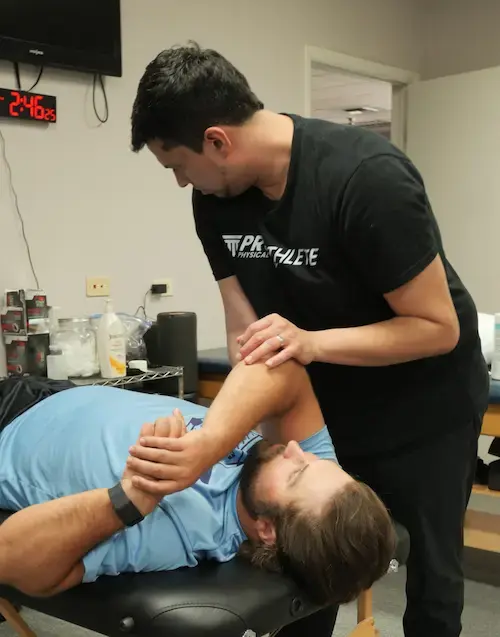
An arm care program is a structured routine of shoulder and elbow strengthening, mobility, and recovery work that a pitcher does year-round. Every baseball player who plays competitively in Colorado should be on one. Our Denver arm care program is led by Thaddeus Hayes, who spent more than 5 years with the Minnesota Twins, and starts with a FREE phone call.
Our Denver baseball physical therapy practice is not in-network with insurance, which is what lets us spend a full hour with each athlete and build a plan that actually works for competitive Colorado baseball players. The starting point for any baseball family is the $100 arm care evaluation. Pricing for rehab and ongoing arm care programming is discussed on your FREE intro call.
Every Colorado youth pitcher should have at least 2 consecutive months of no competitive throwing per year, and at least 4 months of no overhead throwing total. That is hard to pull off in a travel ball culture, but it is the single most protective decision a Denver baseball family can make for a young arm.
Both. Catchers, middle infielders, and outfielders all show up in our Denver practice with shoulder and elbow issues. The arm care principles are the same. The workload math is different.
PRO Athlete Physical Therapy has two locations serving Denver baseball families: Lakewood at 5825 W 6th Ave, Lakewood, CO 80214, and Centennial at 7240 South Fraser St, Centennial, CO 80112. We serve players from Denver, Aurora, Centennial, Lakewood, Boulder, Highlands Ranch, and the surrounding Front Range communities.
Every Colorado youth pitcher should have at least 2 straight months of no competitive throwing per year, and at least 4 months of no overhead throwing total. That is hard to pull off in a travel ball culture, but it is the single most protective decision a Denver baseball family can make for a young arm.
Both. Catchers, middle infielders, and outfielders all show up in our Denver practice with shoulder and elbow issues. The arm care principles are the same. The workload math is different.
PRO Athlete Physical Therapy has two locations serving Denver baseball families: Lakewood at 5825 West 6th Ave, Lakewood, CO 80214, and Centennial at 7240 South Fraser St, Centennial, CO 80112. We serve players from Denver, Aurora, Centennial, Lakewood, Boulder, Highlands Ranch, and the surrounding Front Range communities.
Talk to a Denver-based PT who has worked with professional baseball players.
